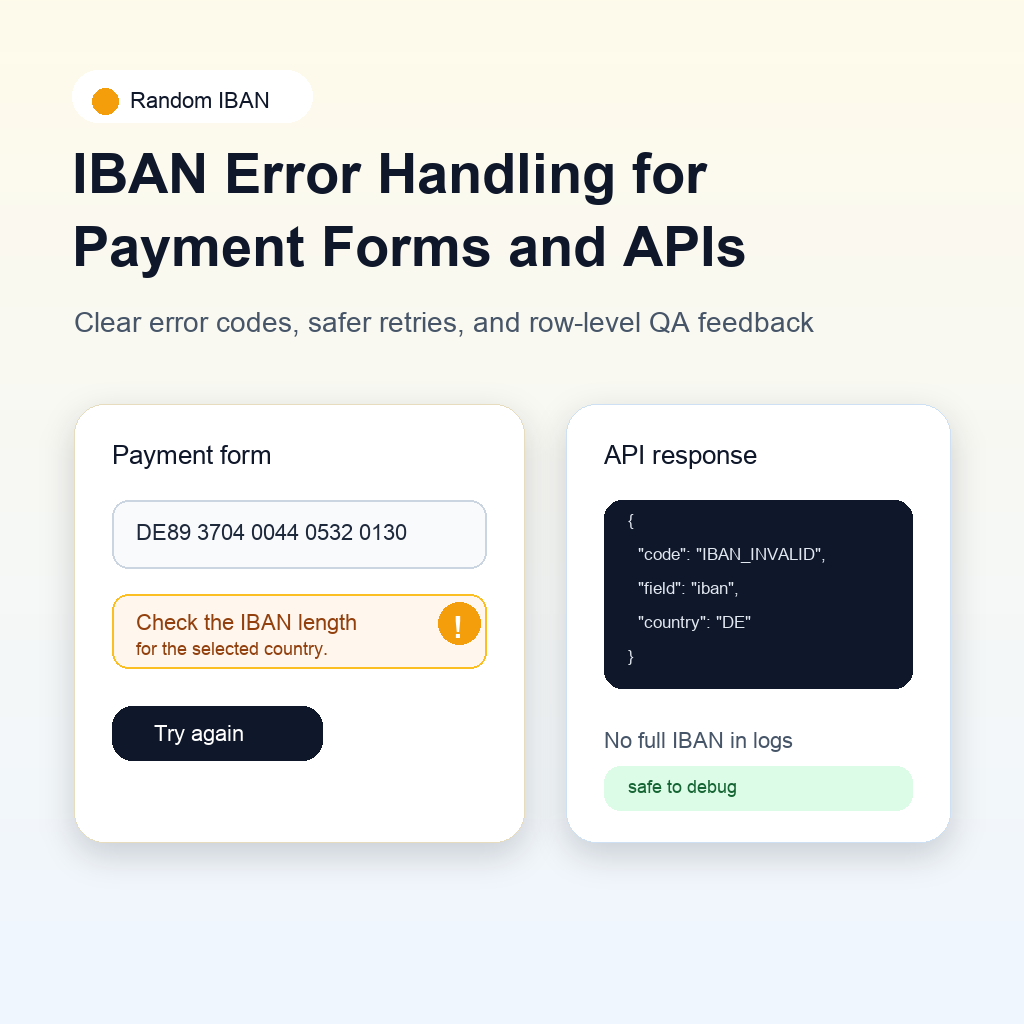
IBANの検証は、アルゴリズムの問題として説明されることが多いでしょう。しかし本番のプロダクトで難しいのは、何かが失敗したときにどう動作させるかという点です。
ユーザーがスペース付きのIBANを貼り付けることがあります。法人顧客が複数の国の口座を含むCSVをアップロードすることもあります。自社の検証に通った後で、決済プロバイダーが受取人を拒否する場合もあります。サポート担当者は、銀行口座番号全体を見ずに失敗の理由を説明しなければならないかもしれません。
優れたIBANエラー処理は、こうしたケースを明確で安全、かつテスト可能なプロダクトの動作に変えます。
何が失敗したかを判断する前に正規化する
IBANの入力の多くは、本当に無効なのではありません。人が読みやすい形式になっているだけです。
決済フォームでは、通常、次の入力を受け付けるべきです。
- 小文字
- グループ間のスペース
- 先頭または末尾の空白
- モバイルバンキングアプリからコピーした値
まず正規化し、その後で検証します。たとえば de89 3704 0044 0532 0130 00 は、構造チェックを実行する前に DE89370400440532013000 へ変換します。
これにより、安全に整形できる入力をエラーとして扱ってユーザーを困らせることを防げます。また、Webフォーム、モバイルアプリ、CSVインポート、社内ツールの間でAPIの動作を一貫させられます。
1つの汎用エラーメッセージにしない
Invalid IBAN は実装しやすい一方で、ユーザーが問題を直す手がかりになりません。より良いシステムでは、よくある失敗の種類を分けます。
| 失敗 | ユーザー向けメッセージ | 内部コード |
|---|---|---|
| 空のフィールド | IBANを入力してください。 | IBAN_REQUIRED |
| サポートされない文字 | 英字と数字だけを使用してください。 | IBAN_UNSUPPORTED_CHARACTERS |
| 不明な国コード | IBANの最初の2文字を確認してください。 | IBAN_UNKNOWN_COUNTRY |
| 国ごとの長さが不正 | このIBANは、その国で想定される長さと一致しません。 | IBAN_INVALID_LENGTH |
| チェックサムの失敗 | IBANを確認してください。1文字以上が誤っている可能性があります。 | IBAN_INVALID_CHECKSUM |
| サポート対象外の国 | この国のIBANにはまだ対応していません。 | IBAN_UNSUPPORTED_COUNTRY |
| プロバイダーによる拒否 | 決済プロバイダーが銀行口座を受け付けられませんでした。 | IBAN_PROVIDER_REJECTED |
メッセージは、ユーザーが行動できる程度に具体的である必要があります。ただし、機密性の高い口座情報を公開したり、値の推測を促したりするほど詳しくしてはいけません。
検証エラーとビジネスルールを分ける
構造上は有効なIBANでも、プロダクトによって拒否されることがあります。国がサービス対象地域外かもしれません。通貨が支払い方法と一致しないかもしれません。プロバイダーが追加の口座確認を要求することもあります。リスクルールによって受取人がブロックされる場合もあります。
次の層を分離しておきます。
| 層 | 問い |
|---|---|
| 正規化 | 入力を整った値へ変換できるか? |
| 構造 | その国の有効なIBANに見えるか? |
| プロダクトポリシー | プロダクトはその国とフローに対応しているか? |
| プロバイダー検証 | プロバイダーはこの口座を受け付けるか? |
| リスク審査 | この受取人は支払いを受け取ってよいか? |
これにより、サポートとデバッグが大幅に簡単になります。すべての失敗が Invalid IBAN になると、チームはシステムの誤った箇所を調べることになります。
ユーザーが行動できるメッセージを書く
役に立つIBANエラーメッセージは、1つの問いに答えるべきです。ユーザーは次に何をすればよいのでしょうか。
良い例:
IBANを確認してください。長さが選択した国と一致しません。英字と数字だけを使用してください。スラッシュやカンマなどの記号を削除してください。この国のIBANにはまだ対応していません。別の支払先口座を選択してください。決済プロバイダーがこの銀行口座を確認できませんでした。別の口座を試すか、サポートに連絡してください。
弱い例:
Invalid inputBank details failedValidation errorMOD-97 failed
技術的なラベルはログやAPIレスポンスに置きます。ユーザーには平易な指示が必要です。
APIのエラー仕様を安定させる
決済APIは、クライアントがプログラムで処理できる安定したエラーコードを返すべきです。人向けのメッセージは時間とともに変わっても、コードは予測可能なままにします。
明確なレスポンスは、たとえば次のようになります。
{
  "error": {
    "code": "IBAN_INVALID_LENGTH",
    "message": "This IBAN does not match the expected length for its country.",
    "field": "iban",
    "details": {
      "country": "DE",
      "expectedLength": 22
    }
  }
}
ここで含まれていないものに注目してください。送信されたIBAN全体です。エラーレスポンスに口座番号をそのまま含めると、ブラウザログ、サポートのスクリーンショット、APIゲートウェイ、監視ツールに残る可能性が高まります。
一括インポートには行単位のフィードバックを用意する
CSVや一括アップロードのフローでは、IBANエラーがさらに扱いにくくなります。財務チームが数百件の仕入先、従業員、加盟店を一度にアップロードすることがあります。ファイル全体を1つのメッセージだけで拒否すると、不要なサポート作業が発生します。
より良い一括インポートには、次の要素が含まれます。
- アカウントを作成する前にすべての行を検証する
- 行番号とフィールド名を返す
- 繰り返し発生するエラーをまとめ、パターンをすばやく修正できるようにする
- マスクした値だけを含むエラーレポートをダウンロードできるようにする
- プロダクトが部分インポートを明示的にサポートする場合に限り、成功した行を保持する
行単位のフィードバック例:
| 行 | フィールド | エラー |
|---|---|---|
| 14 | IBAN | 国コードはサポートされていません |
| 27 | IBAN | IBANを確認してください。1文字以上が誤っている可能性があります |
| 41 | IBAN | 英字と数字だけを使用してください |
一括フローでは通常の決済フォームとは異なるパーサーやエラー表示を使うことが多いため、専用のQAケースを用意します。
ログとサポートツールを保護する
IBANエラーは、意図しないデータ漏えいを引き起こすことがあります。検証に失敗したペイロードが、リクエストログ、分析ツール、エラートラッカー、キューのダッシュボード、サポートシステムに取り込まれる可能性があります。
マスキングルールは成功時と失敗時の両方に適用します。
- 送信されたIBANを生のままログに記録しない
- 検証エラーメッセージにIBAN全体を含めない
- 国、末尾4文字、受取人ID、エラーコードを記録する
- リクエストボディがアプリケーションの外へ出る前に、IBANらしい値をマスクする
- デッドレターキューとバックグラウンドジョブのペイロードを確認し、機密フィールドがないか調べる
安全なイベントなら、銀行口座データのシャドーコピーを作らずに、エンジニアリングチームへデバッグに必要な文脈を提供できます。
{
  "event": "iban_validation_failed",
  "beneficiaryId": "ben_7f2a",
  "ibanCountry": "DE",
  "ibanLast4": "3000",
  "errorCode": "IBAN_INVALID_CHECKSUM",
  "requestId": "req_91c4"
}
これで問題のデバッグに十分な情報を確保し、多くの可観測性ツールに対しても十分安全なイベントになります。
再試行フローを慎重に設計する
すべてのIBANエラーを同じ再試行フローにするべきではありません。
入力にスペースや小文字が含まれている場合は、静かに正規化します。チェックサムが失敗した場合は、値を確認するようユーザーに求めます。国がサポート対象外の場合は、長いオンボーディングフローを進める前に知らせます。送信後にプロバイダーが口座を拒否した場合は、マスクした口座レコードを保持し、次の手順を説明します。
適切な再試行フローでは、次のことを行います。
- ユーザーが編集中に限り、入力した値を表示する
- 保存後は値をマスクする
- 問題が形式、ポリシー、プロバイダー拒否のどれなのかを説明する
- 変更されていない同じ口座をプロバイダーへ繰り返し送信しない
- サポートが参照できる安定したエラーコードを提供する
これにより、ユーザーの不満とプロバイダーへの重複呼び出しの両方を減らせます。
自動化する価値のあるQAケース
IBANのエラー処理は、手動QAだけでなく回帰テストの一部にするべきです。自動化に適したケースには次のようなものがあります。
| テストケース | 期待される動作 |
|---|---|
| 小文字の有効なIBAN | 正規化して受け付ける |
| スペース付きの有効なIBAN | 正規化して受け付ける |
| チェックサムが不正 | チェックサムエラーで拒否する |
| 国ごとの長さが不正 | 長さエラーで拒否する |
| サポート対象外の国 | ポリシーエラーで拒否する |
| 入力に記号がある | サポートされない文字として拒否する |
| プロバイダーによる拒否 | マスクしたレコードを保存し、プロバイダーエラーを返す |
| 行が混在した一括アップロード | 行単位のフィードバックを返す |
| 失敗したリクエストのログ記録 | IBAN全体がログに現れない |
開発用テストIBAN番号で生成したテスト値と、フィンテックQA用の合成IBANデータにあるプロダクト固有のfixtureを使用してください。
避けるべきよくある間違い
ブラウザ側の検証だけに頼らないでください。サーバー側の検証を唯一の正しい判定元にします。
すべての失敗に同じエラーを返さないでください。ユーザー、サポート、クライアントアプリケーションは、どのような問題が起きたのかを知る必要があります。
エラーレスポンスやログにIBAN全体を出さないでください。失敗した入力も、成功した入力と同じように扱う必要があります。
プロバイダーによる拒否を検証失敗として扱わないでください。形式とチェックサムの検証に通った場合、プロバイダーの失敗は別の状態として表現します。
一括インポートのエラー処理を後回しにしないでください。財務・運用チームには、アカウントごとにサポートチケットを開かなくても修正できる行単位のフィードバックが必要です。
関連リソース
検証アルゴリズムについては、IBAN番号の検証方法を読んでください。安全な保存方法については、決済システムでIBANを安全に保存する方法を参照してください。プロダクト全体を広く確認するには、IBANテストチェックリストを使用してください。
まとめ
明確なIBANエラー処理は、UX、API設計、データ保護の組み合わせです。優れたシステムは、人が入力しやすい値を正規化し、安定したエラーコードを返し、次の手順を平易な言葉で説明し、銀行口座番号全体をログやサポートツールへ広げません。
その結果、決済フォームは入力しやすく、APIは統合しやすくなり、QAフローも信頼できるものになります。